


Running a half marathon at 40: my race comeback with the "Running Coach"

Fabian Reichle
I was never fast, but I found running relatively easy and so accessible that I never needed a plan. That was in my twenties. In 2015, I ran my last half marathon – and then I stopped. Other endurance sports were calling out to me more. Until recently, that is.
Why I’m running again
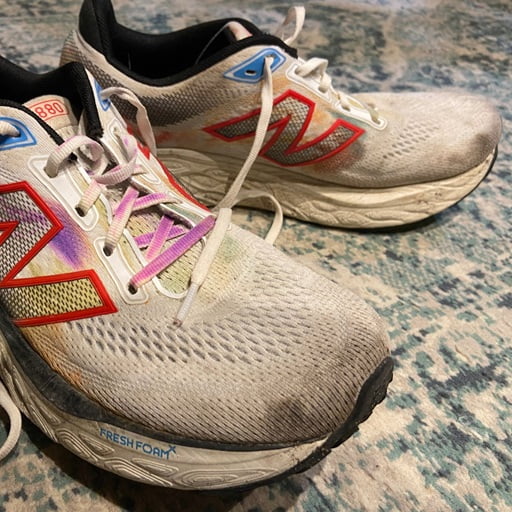
Ten years later, I'm rediscovering the benefits of running. The main reason I've come back to it is my young family. I simply don't have the time for long racing bike tours or mountain adventures. But running works – just put on your shoes, head out and go. So I got my gear up to date and picked up where I left off. That was a mistake.
Our limits at age 40
Immediately after my first training session, my body was showing me clear limits. At 40, you can’t just start running, even if you feel fit. In many other sports, I had been making continuous adaptations based on my age, but in running, I had taken a break for an entire decade.
When your ambitions don't match your degree of success, you can get frustrated and feel out of sorts. Why did running feel so hard all of a sudden? And how should I even get started? Especially since I had already got excited and signed up for a half marathon. Time remaining until the event: six months. The pressure was helping, but how I should I train?
Looking for structure
I gathered tips from people I knew and online. Technique, pace, distances, warming up, stretching – I meticulously implemented all of it. I soon got to the point where I needed a structured training plan. ChatGPT provided me with a solid foundation, but crucial parameters such as pace, intervals or heart rate were missing. I covered mile after mile, but I didn’t know if they were really making any difference. The frustration returned – until I came across an app called Running Coach.
Starting with Running Coach
The app promises to provide a dynamic and personalised training plan, for beginners and more ambitious runners alike. The advertising sounded good, but maybe it was just what I needed. The app costs 14 francs per month for the basic version, 21 francs for silver with access to expert advice and 104 francs for gold, which includes a personal coach. I opted for silver, which provided a solid plan plus a human component.
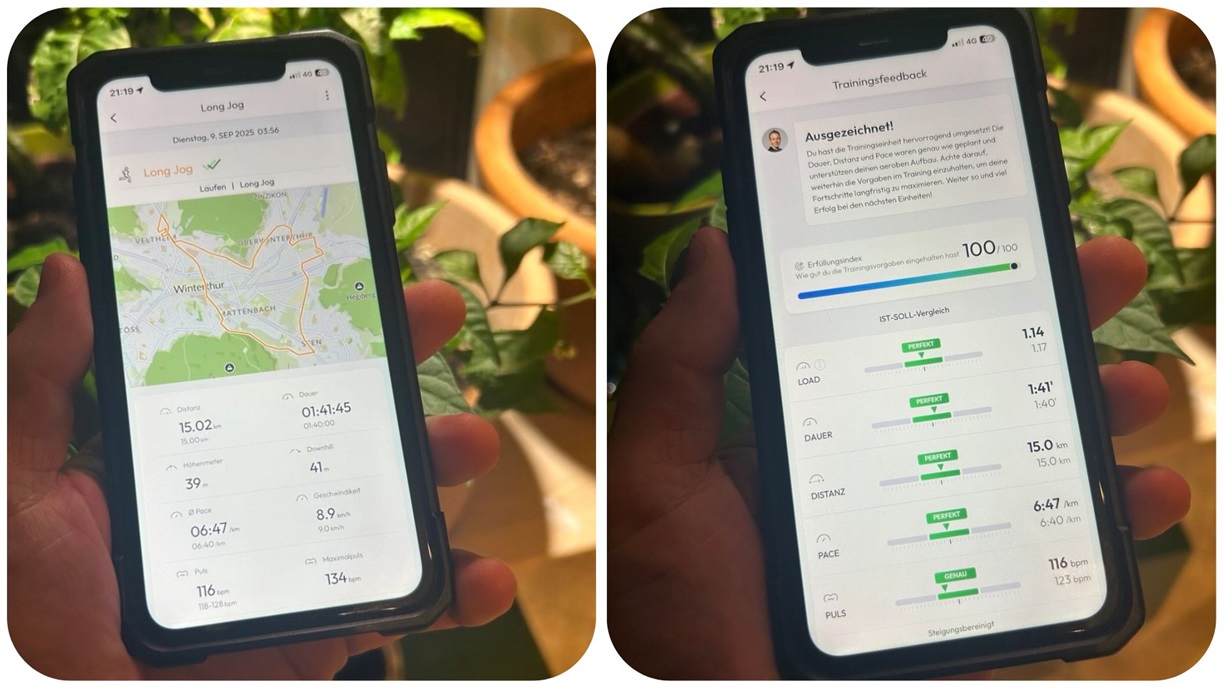
When you get started, the set-up is personalised. Age, weight, resting heart rate, running experience, pace, records – everything goes into your plan. I set my goal with Greifenseelauf as my main competition. This is relevant because main competitions influence the intensity of training more than any recreational engagements you may have. As my final step, I decided when I could train – and with a simple click, my plan was ready.
First runs, first surprises
Suddenly my calendar was full. A long jog, an endurance run, at a medium pace. It was very specific, with details on distance, time, heart rate and pace. At first, I was irritated that, based on my experience, I felt like I was being set an extremely slow pace. But it was actually what my body and my mind needed. Finally, I had a clear path set out for me.
Soon the first big stretch was coming up – 18 kilometres. Until then, my limit had been half of that. But I stuck to the pace and warm-up time, and ran it without any problems. This was doubly motivating. The plan was realistic and I made real progress. As accessible as running seems, if you want to build up your endurance and get faster and more efficient, you need structure. I used to run blindly, but nowadays I want to make the most of the limited amount of time and capacity that I have. Running Coach helps.
More than just training
The trick with the app is that the plan continuously adapts to my data, which is recorded via my sports watch. Each session is displayed in detail – from warm-up time and nutrition to stretching exercises and elevation runs. The features are rounded out by blog posts, for example explaining how to deal with skipped runs. These posts are informative and reassuring, precisely because there are always individual factors in exercise.
Setbacks before the race
Of course, it's still important to listen to your own body. About a week and a half before the half marathon, I noticed signs of fatigue. Starting a workout with sore muscles soon leads to overtraining. My calf muscle and Achilles tendon protested. Fortunately, all I had was some pain that subsided with rest and care. I skipped the last training session before the half marathon – and felt a bit uneasy. Was I too optimistic? Would I even be able to start?
Race day: ready, steady, go
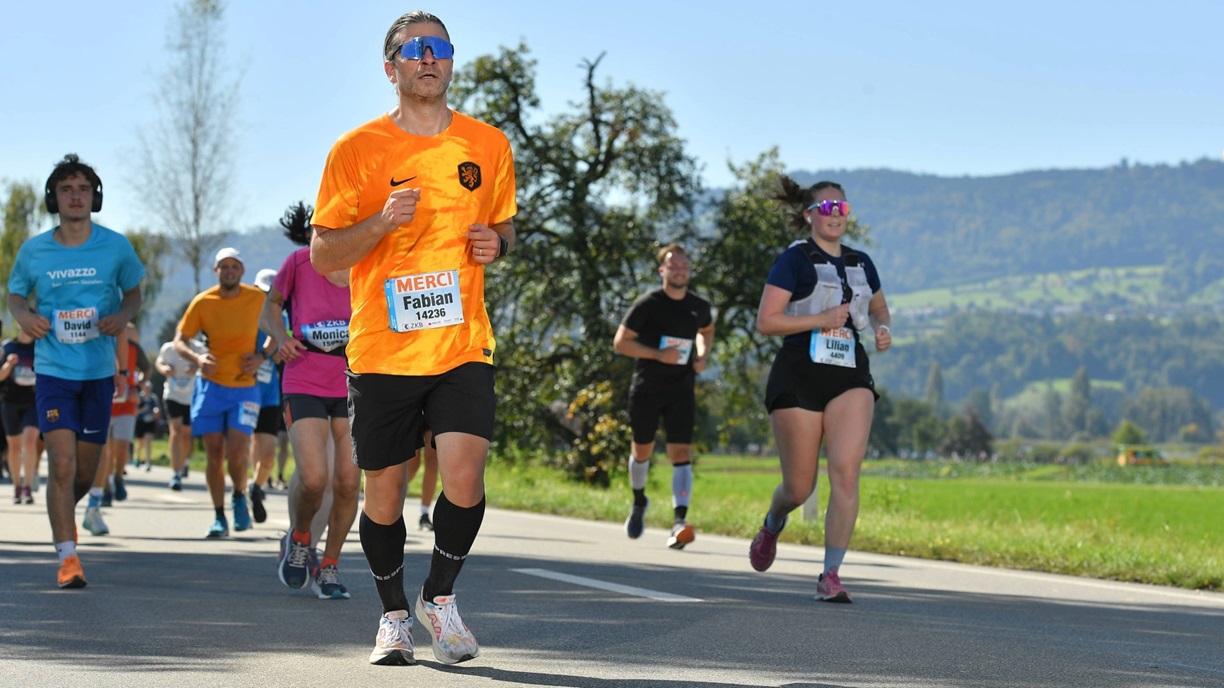
On the day of the event, everything worked out. The clock at the finish line showed two hours and thirteen minutes – my second fastest half marathon time ever. I was exhausted but happy. Nutrition, pacing, difficulty – everything had been right. Running Coach was an essential building block on the path to success.
Costs for Running Coach
For all fans of running: With SWICA Completa Praeventa or Optima supplementary insurance, you benefit from great contributions towards Running Coach. More information is available on our website or directly from the provider.
Tips and facts about running
Interval training? Aerobic zone? Runner’s high? You'll find the most important facts and practical tips in our comprehensive article on running.


