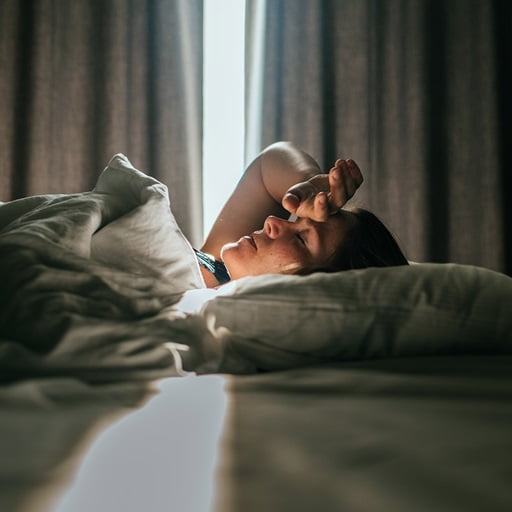
Much more extreme than a standard headache, migraines affect the daily lives of the many people who suffer from them, and reduce their quality of life. Read this health tip to find out what constitutes a migraine, and how to prevent them.
For many people, migraines come on suddenly with a pulsing pain, usually on one side. In Switzerland, more than one million people suffer from migraines, with women particularly affected.
Possible triggers of migraines
Stress
Certain foods such as nuts, chocolate or wine
Irregular sleep patterns, changes in day/night rhythms
Hormonal fluctuations
A migraine is a complex neurological disorder caused by dysregulation of the nerves and blood vessels, with the latter being relativised in current studies. The brain is particularly sensitive to triggers such as stress or lack of sleep. These factors can lead to malfunctions in the brain stem, the area that is also responsible for managing pain. This allows the meninges – the membranes enveloping the brain and spinal cord – to receive pain signals. Vascular-dilating neurotransmitters in the meninges then trigger mild inflammation, which explains the throbbing pain of a migraine.
In regard to possible causes, the question of whether the foods mentioned above or at least whether the desire for these foods may be a harbinger of a migraine has not been conclusively resolved from a scientific point of view. Scientists have also stated in studies that the disease may be hereditary. Of those affected, 70% have at least one first-degree relative who suffers from migraines.
The possible symptoms
Pounding or pulsating headache, usually on one side
Nausea, vomiting
Hypersensitivity to light, sounds or odours
Exercise can exacerbate headaches
Sometimes a migraine attack is preceded by an “aura”. An aura may manifest itself as a neurological effect such as visual disturbances, ringing in the ears or prickling discomfort on one side of the body, all the way through to stroke symptoms. The headache usually sets in 20-30 minutes later.
“Symptoms such as one-sided paralysis or speech problems during an aura can be very frightening for those affected.”
Evelyn Mauch, neurologist at santé24
A migraine can last anywhere from several hours to three days. If the migraine lasts longer than 72 hours it is referred to as a “status migrainosus”, which requires immediate medical attention.
How to prevent migraines
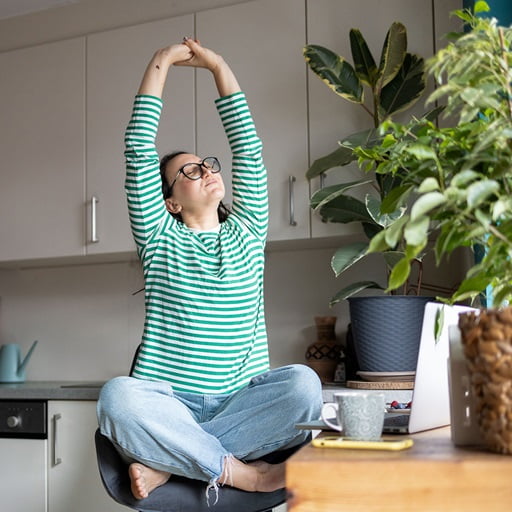
Schedule 30-minute relaxation sessions three times a week
Do endurance or strength training three times a week
Plan breaks into your daily routine
Take magnesium for muscle relaxation
Take vitamin B2 to strengthen your nerves
When the pounding starts in your head…
…you can drink a strong coffee.
Previous studies have shown that during a migraine, the blood vessels narrow and then widen. It is now assumed that these changes in the blood vessels are a consequence rather than a cause of migraines.
The caffeine in coffee helps because it has the effect of narrowing the blood vessels. Some people find it helpful to add a little lemon juice to their coffee, although the effectiveness of this has not been scientifically proven. Caffeine also has analgesic properties and can enhance the effect of painkillers. It can also reduce inflammatory processes in the brain during a migraine.
…you can take a painkiller if necessary.
If taken early, active substances such as paracetamol or ibuprofen can help make migraines milder due to their analgesic (and in the case of ibuprofen, also anti-inflammatory) properties. Products containing both active substances are also available in Switzerland. Before taking any medication, it is recommended that you consult a specialist. When taken promptly, special prescription migraine medications such as the triptan group of medicines can also provide effective relief. Major advances have been made in the field of migraine remedies with a treatment called monoclonal antibodies (mAbs) against calcitonin gene-related peptide (CGRP) for treatment-resistant forms.
…try not to worry if you need to pause your daily routine.
Migraines are often triggered by stress, and dealing with an attack can make it difficult to cope with everyday life. Worrying about not getting to the items on your to-do list is counterproductive as this can make a migraine worse.
…you should record it in a headache diary afterwards.
The causes of migraines are as varied and diverse as the people who suffer from them. A headache diary can help you recognise patterns and avoid possible triggers.
Migraines are often not an isolated issue
If an underlying illness is associated with at least one other condition that can be distinguished from the underlying illness, then this is referred to as a comorbidity. Within this context, migraines can be associated with depression or anxiety. In short, migraine sufferers have an increased risk of developing depression, and vice versa, as people with depression have an increased risk of developing migraines.
Help with headaches
santé24 offers SWICA customers targeted specialist advice and/or treatment during its headache consultation hours for chronic, recurrent headaches or migraines. Before the consultation, you can download a headache calendar and fill it in over a period of one to four weeks. More information is available here.