

Moles: prevention is better than cure

Valentina Diaco
According to the Swiss Federal Office of Public Health, Switzerland has one of the world's highest rates of skin cancer, with the number of new diagnoses doubling over the past 30 years.
Risk factors that can contribute to skin cancer

- fair/pale skin
- more than 100 moles on the body
- unprotected sun exposure
- using sunbeds
- conspicuous changes in skin texture or colour, sometimes with bleeding
- autoimmune diseases
What are moles?
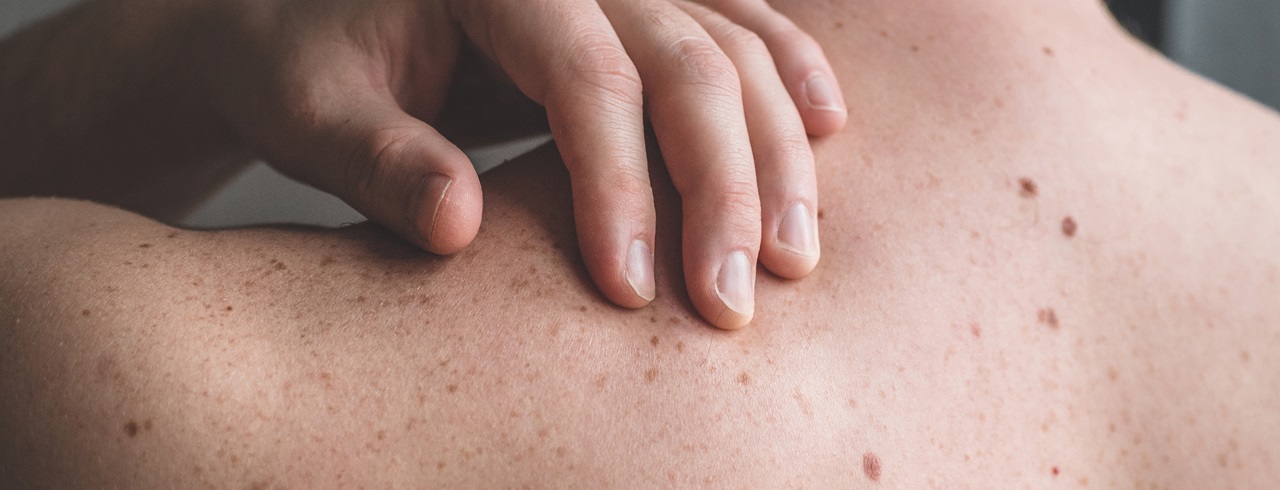
Moles are spots or patches on the skin that appear when pigment cells (melanocytes) cluster in one place. While they are usually harmless, any change in size, shape or colour could be a sign of skin cancer (melanoma).
Dermatological advice from santé24
santé24 offers SWICA customers free dermatological advice and, whenever possible, a recommended course of treatment. SWICA also works with the OnlineDoctor platform, which SWICA customers can use to ask medical experts to assess their skin problems. You can find further information and details of how to register here.
The ABCDE rule
The ABCDE rule can be used to assess whether a mole is harmful and provides guidance as to what action is required. Medical advice should be sought if a mole changes or a new one appears and at least one of the following applies.

A: Asymmetry
The mole is asymmetrical, i.e. the two halves look different and it is not a round, oval or long shape.
B: Border
The edges of the mole are not well-defined – it has an uneven or blurred outline.
C: Colour
The mole contains a mix of different shades or colours - these could be either lighter or darker. You should definitely see a doctor if a mole has pink, grey or black colouration or there is any crusting.
D: Diameter
Moles that are more than six millimetres in diameter should also be examined by a doctor.
E: Evolution
The mole has grown by more than a millimetre, feels rough or flaky, or has visibly changed in any other way.
Minimising the risk
As our body's highly visible, largest organ, the skin is constantly exposed to a host of environmental factors, the most harmful being UV rays. However, melanomas can also occur in places with little exposure to the sun, such as mucous membranes, under the nails or in the eyes. The following preventive measures can help reduce the risk:
- On sunny days, stay in the shade between 11:00 and 15:00 when the sun's rays are at their strongest.
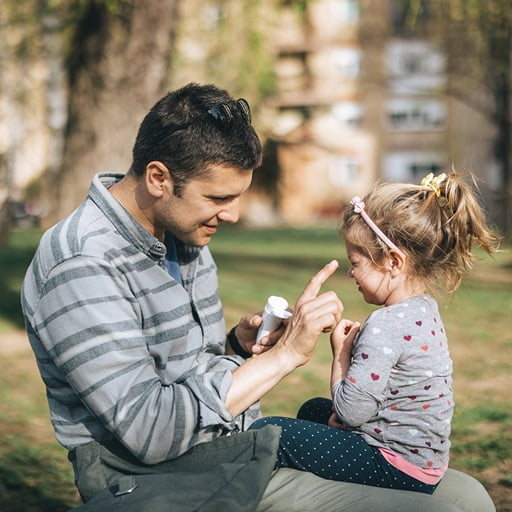
- Protect your skin with a high-factor sunscreen and reapply at regular intervals to ensure you stay protected. Don't forget your lips and ears.
- Cover exposed areas of skin with clothing, and wear a hat and sunglasses.
- Never use a sunbed.
Information for parents
Parents should take extra care to protect their children from harmful UV rays, as their skin is much more sensitive than an adult's. The Krebsliga website (in German) provides important recommendations and emphasises that shade offers the best protection.


