

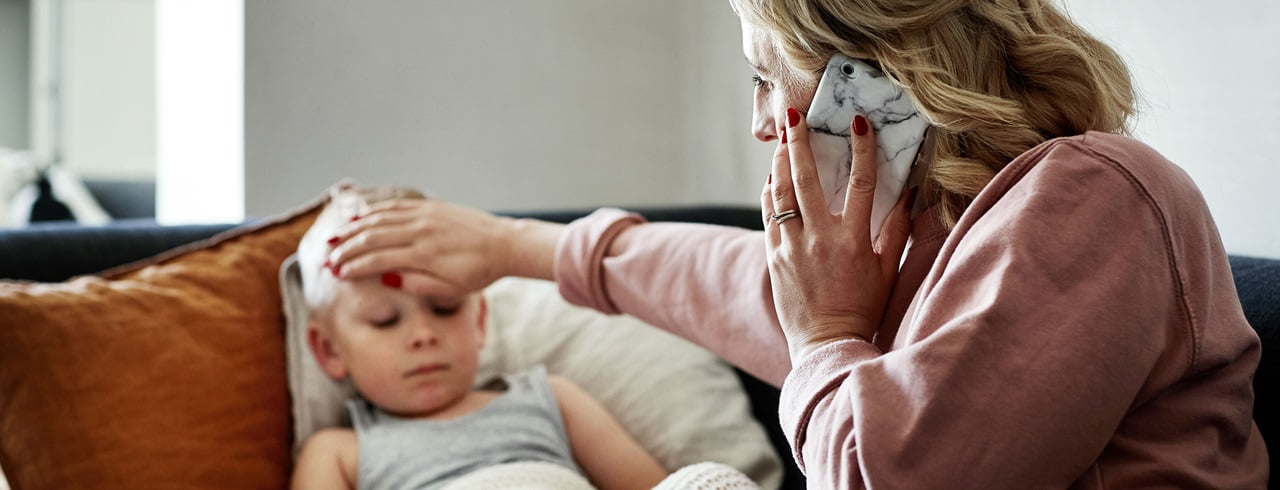
Understanding fever in children: what parents should know

Content-Team SWICA
80 or 125 milligrams? Paracetamol, or maybe ibuprofen? It’s not unusual for parents to have to decide which medication to give their children when they have a fever. Above all, parents are often uncertain about the correct dosage. But even choosing the right medication is not always easy.
What is fever?
A person is said to have a fever when their temperature exceeds 38.5°C. However, in the case of children, this fact alone is not enough to decide whether fever medication should be given or not. If a child continues to play as usual despite having a fever, there is no need to resort to medication.
Fever is not a disease; it’s only a symptom of a range of illnesses. The actual temperature is not a reliable indicator of the severity of an illness or whether its cause is viral or bacterial. In principle, fever is part of the body's defence mechanisms and is therefore a "healthy" reaction.
How do you measure a fever?
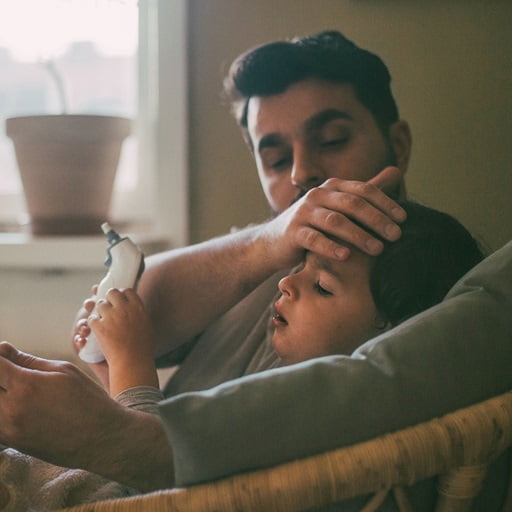
You can measure body temperature in different places. It is important to know that the result may vary depending on where you measure it. The most common measurement locations are in the ear, under the tongue, under the armpit or in the rectum. One particularly reliable way to measure core body temperature is rectally, i.e. in the anus.
Medication – yes or no?
Fever medication is given to a child in order to relieve symptoms. The child may be very "dull" and weepy, may not want to eat or drink, or may be sleeping badly due to fever.
Unlike for adults, the medication dosage for children is based on the child’s body weight. Since children grow very quickly, this is the best way of ensuring that exactly the right amount of the active ingredient is provided. Too little or too much would not have the desired effect. For children weighing 6.5 kilograms or more, for example, 125 milligram suppositories are administered.
What if the medication doesn’t work?

When it's better to be safe than sorry
If the fever persists for more than three days and repeatedly rises above 39 °C you should visit your paediatrician to ascertain what your child needs and what steps are required next.
For infants younger than three months, it is advisable to see a paediatrician as soon as their body temperature rises above 38 °C. More information on fever in children can be found here (in German only).
For your health: santé24 and SWICA Benecura
Do you have a health question? Our physicians and healthcare professionals at santé24 are available 24/7 on +41 44 404 86 86 for SWICA customers. In addition to telephone health advice, patients whose conditions are appropriate for telemedicine can receive medical services such as diagnostics, treatment, and even e-prescriptions for prescription medications.
Do you feel ill? The SWICA Benecura medical app makes it easy to carry out a digital SymptomCheck. You will receive a personal recommendation about what to do next. Send your information in encrypted form to the santé24 online practice for your telephone consultation to significantly shorten the assessment.


