


Hair loss: what can you do about it?

Content-Team SWICA
Differences between men and women
Many people suffer hair loss particularly in old age. This is because hormones play a major role in the process. Men especially are often predisposed to (hereditary) hair loss, which can even start at a young age and end in complete baldness. The reason behind it is that hair follicles are sensitive to male sex hormones called androgens. Women, especially those who already have significant hair patterns (hair on the legs and potentially also on the back and face), can also be affected. However, women's hair tends to thin out around the crown of the head or become thin and brittle in this area.Emotional or health-related causes
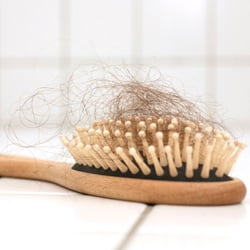 There are other factors that can also lead to abnormal hair loss. They include vitamin and iron deficiency, a poor or imbalanced diet (especially if you’re doing a fasting treatment), malfunctions of the thyroid gland or taking certain types of medication. In the case of health-related causes, hair usually falls out evenly all over the head. The time of year can also play an important role, with many people losing more hair than normal in the spring and autumn. Women may also experience increased hair loss in the first few months after childbirth. However, this usually sorts itself out.
 Circular hair loss
The hair actually falls out in circles and the scalp becomes visible. With some illnesses, even the eyebrows and eyelashes can fall out in as the condition progresses. Not infrequently, the immune system is involved here and mistakenly "works against the hair".Possible treatment
Medicine-based treatment can be tried in the case of hereditary hair loss. However, this should always be prescribed by a family doctor or dermatologist, as it affects the hormone balance. It is also the case with circular hair loss that a specialist (dermatologist) should always be consulted, as this type of hair loss is very difficult to treat. If the hair loss has other causes (e.g. nutrient deficiency, a thyroid disorder or medication), these must be addressed. In case of obvious hair loss, it always makes sense to seek advice from a medical professional.santé24 – your Swiss telemedicine service
Medical help around the clock: The doctors and medical specialists at santé24 are there for you 24 hours a day to answer questions relating to prevention, illness, accident and maternity. Advice is free of charge to SWICA customers.
13.09.2023
For your health: santé24 and SWICA Benecura
Do you have a health question? Our physicians and healthcare professionals at santé24 are available 24/7 on +41 44 404 86 86 for SWICA customers. In addition to telephone health advice, patients whose conditions are appropriate for telemedicine can receive medical services such as diagnostics, treatment, and even e-prescriptions for prescription medications.
Do you feel ill? The SWICA Benecura medical app makes it easy to carry out a digital SymptomCheck. You will receive a personal recommendation about what to do next. Send your information in encrypted form to the santé24 online practice for your telephone consultation to significantly shorten the assessment.


