


Smoothies: to be enjoyed in moderation
Smoothies consist mainly of fruit and vegetables, which means they’re rich in vitamins. But beware: there are pitfalls you should be on the lookout for.
29.07.2020 | 3 minutes reading time

Author:
Content-Team SWICA
Content-Team SWICA
Five portions a day is the recommendation, but it’s not always easy to eat enough fruit and vegetables. So the thought of being able to throw a banana, some apple or carrot – or whatever – in a blender and get your daily requirement in a few gulps of smoothie is very tempting. But if you do so, there are a few facts you should bear in mind.
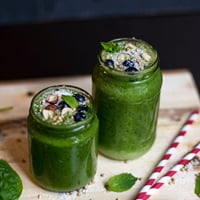 You should take special care when it comes to sweet fruits, which are loaded with calories in the form of fructose. If your smoothie contains too much fruit you’ll take in a huge amount of fructose very quickly – an amount you’d normally never eat. Because the body can only process a limited amount of fruit sugar, you’ll end up with a surplus of fructose that isn’t good for your intestines, resulting in stomach ache, gas or diarrhoea. The body can’t store fructose in the form of energy either, so when you consume too much it turns into fat. It’s therefore better to make a smoothie with more vegetables than fruit. That way you cut the calories and reduce the risk of digestive problems from too much fructose.
 Just because fruit and vegetables are best consumed in solid form doesn’t mean you have to eliminate smoothies altogether. As so often, it’s a question of moderation: if you’re looking for an alternative in a hurry it’s okay to opt for juice once in a while – preferably juice you’ve made yourself. If you don’t have time for the home-made version and have to resort to a store-bought product, take a good look at the ingredients, as drinks are often diluted with pure juice. But smoothies are no lasting substitute for fresh fruit and veg. Another point to bear in mind is that a typical smoothie doesn’t contain dairy products. It’s made of pure fruit and vegetables, although you can also add nuts, seeds or herbs to taste.
29.07.2020
More fruit than vegetables
You should take special care when it comes to sweet fruits, which are loaded with calories in the form of fructose. If your smoothie contains too much fruit you’ll take in a huge amount of fructose very quickly – an amount you’d normally never eat. Because the body can only process a limited amount of fruit sugar, you’ll end up with a surplus of fructose that isn’t good for your intestines, resulting in stomach ache, gas or diarrhoea. The body can’t store fructose in the form of energy either, so when you consume too much it turns into fat. It’s therefore better to make a smoothie with more vegetables than fruit. That way you cut the calories and reduce the risk of digestive problems from too much fructose.The form matters
When you purée whole fruits and vegetables you also lose a lot of the dietary fibre. Your intestines feel the lack, and it can lead to constipation. Not only this, but the form in which you consume fruit and vegetables is also important in terms of feeling full. You feel more satiated after a solid meal than after a drink because your stomach is fuller. Given the nutritional and calorific value of smoothies, they’re more of a small meal than an in-between drink.Drink slowly!
This means you should schedule smoothies as a snack between meals rather than as a thirst-quencher. And when you take a sip it’s best to keep it in your mouth for a while to let the juice mix with saliva. This contains an enzyme called amylase that starts breaking down carbohydrates – which smoothies contain a lot of – in your mouth and helps prevent gas. What’s more, the pH of saliva can partially neutralise acid foods, which is less irritating for your stomach. It’s advisable not to drink too great a quantity at once to make sure you don’t overload your gut.The occasional smoothie is okay
Just because fruit and vegetables are best consumed in solid form doesn’t mean you have to eliminate smoothies altogether. As so often, it’s a question of moderation: if you’re looking for an alternative in a hurry it’s okay to opt for juice once in a while – preferably juice you’ve made yourself. If you don’t have time for the home-made version and have to resort to a store-bought product, take a good look at the ingredients, as drinks are often diluted with pure juice. But smoothies are no lasting substitute for fresh fruit and veg. Another point to bear in mind is that a typical smoothie doesn’t contain dairy products. It’s made of pure fruit and vegetables, although you can also add nuts, seeds or herbs to taste.Helping you stay healthy
SWICA supports people with Praevita and Optima supplementary insurance with contributions towards dietary analysis and nutritional advice from recognised nutritionists and dietitians and towards courses on conscious, healthy nutrition.29.07.2020
For your health: santé24 and SWICA Benecura
Do you have a health question? Our physicians and healthcare professionals at santé24 are available 24/7 on +41 44 404 86 86 for SWICA customers. In addition to telephone health advice, patients whose conditions are appropriate for telemedicine can receive medical services such as diagnostics, treatment, and even e-prescriptions for prescription medications.
Do you feel ill? The SWICA Benecura medical app makes it easy to carry out a digital SymptomCheck. You will receive a personal recommendation about what to do next. Send your information in encrypted form to the santé24 online practice for your telephone consultation to significantly shorten the assessment.


