

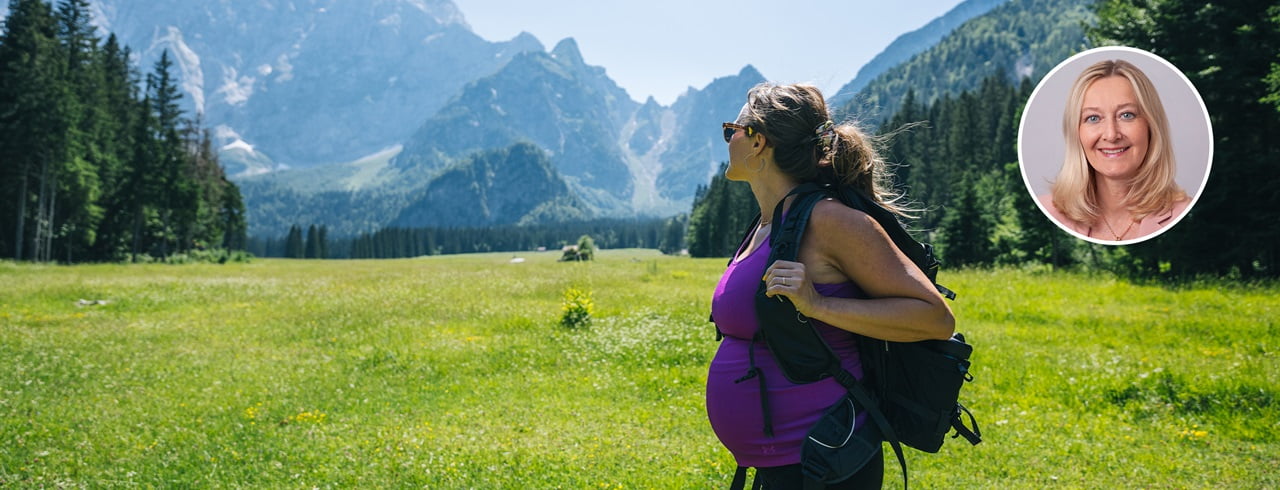
Pregnancy: When the mountains call…
Walking is good for you, even when you're pregnant. To make that mountain hike as enjoyable as possible for the expectant mother and her child, there are a few things to bear in mind. Silke Schmitt Oggier, chief physician of santé24, puts us on the right track.

Carmen Hunkeler
Lush meadows, sparkling lakes and great views – hiking is one of the most popular pastimes in Switzerland and a great way to escape the stress of everyday life. But what if you hear the call of the hills and you’re pregnant? «Exercise during pregnancy is just as good as exercise outside of pregnancy,» says Silke Schmitt Oggier, chief physician at santé24. «Hiking carries little risk of injury, especially if you walk on level trails and use good equipment.»
Gets the circulation going
The body of a pregnant woman goes through a lot of changes in a relatively short time. For example, the cardiovascular system adjusts to take optimum care of the unborn child and the expectant mother can easily become dizzy. Since regular exercise boosts your circulation, hiking can help reduce this dizziness. And like any physical activity, walking lowers blood sugar levels, which plays an important role in preventing gestational diabetes. The bigger the unborn child grows, the less space there is for its mother's lungs. This can make it difficult for her to breathe. Hiking allows the expectant mother’s body to absorb more oxygen, which is good for the lungs. The increased oxygen uptake also benefits the unborn child.
Caution at altitude
However, altitude is an important factor when hiking, especially for pregnant women. «The more advanced the pregnancy, the more difficult it is to breathe properly and deeply,» explains Schmitt Oggier. «Add in the altitude, the thinner air and the greater oxygen requirement, and respiratory distress of varying degrees can occur.» Expectant mothers should therefore not go higher than 2500 metres, especially if they're not used to walking at these heights. Schmitt Oggier also advises pregnant women to avoid extreme differences in elevation, tackling increases in altitude in several stages rather than ascending quickly in a cable car.

Improved physical awareness and better regeneration
As pregnancy progresses, the ligaments become looser and the altered centre of gravity can put a lot of strain on the back muscles. Back pain is often the result. Hiking can help reduce tension in muscles and joints, stabilising tendons and muscles and making them more elastic. This improves the expectant mother's body awareness and hones her motor skills.
Many pregnant women experience greater pressure in the veins of their legs, which can be accompanied by water retention, blood congestion, varicose veins or thrombosis. The good news is that hiking can help prevent such problems. Regular physical activity helps mothers recover in the postpartum period and regain their former weight more quickly.
Boosting happiness hormones
The many changes in pregnancy leave many women feeling tired and exhausted. Especially in the later months, they can also experience sleep problems. Schmitt Oggier explains that because hiking clears the mind and usually comes with positive experiences of nature, it's a great way to relieve these symptoms. Exercise in the fresh air boosts energy levels and improves wellbeing, as long walks stimulate the production of the happiness hormones serotonin and dopamine in the body. These make you more calm and relaxed, boost self-esteem, reduce depression and anxiety, and improve sleep quality. The happiness hormones also strengthen the immune system and act as painkillers. Last but not least, regular physical activity increases the rate at which nerve cells in the brain branch and renew, improving mental capacity. According to a study by Dave Ellemberg and his team, when expectant mothers engage in sports and exercise it also has a positive effect on the unborn child's brain activity.
Don't overdo it
But as with any other sport, you shouldn't try anything new in pregnancy. «If you didn't go on regular high-mountain hikes before, you shouldn't try it for the first time when you're pregnant,» says Schmitt Oggier. She advises novice hikers to opt for shorter routes at lower altitudes and start slowly. In general, pregnant women shouldn't overdo it when hiking, even if they regularly engaged in alpine sports before pregnancy. «It’s important to keep a close eye on the body so that you don’t ask too much of it at once.»
If things get too strenuous, it helps to take a break and have a snack or drink if necessary. Generally you should plan your route so that you can take shortcuts or end the hike early if things become too much for the expectant mother. Especially in the last three months before birth, pregnant women should make sure they take sufficient breaks and adapt the route accordingly: «Every downward step sends a shock through the body, so expectant mothers should choose level ground rather than routes that involve too much downhill,» recommends Schmitt Oggier.
Good equipment and plenty of provisions
Expectant mothers should bring plenty of water or herbal tea (at least 1.5–2 litres) on the hike and sufficient snacks to cover the increased calorie requirements. Suitable snack choices include fruit and vegetables as well as wholemeal sandwiches, dried fruit and nuts. It's just as important to have the right gear. The most important equipment when hiking is stout footwear, especially in pregnancy when the centre of gravity is altered. Well-fitting footwear can significantly reduce the risk of injury. Especially on the descent, it's advisable to use hiking poles to help you keep your balance. Changes in the weather must always be reckoned with, so it's a good idea to wear several thin layers of clothing that provide protection against cold, wind, rain and heat.

Beware of sun and heat
As the skin of expectant mothers is more sensitive to light, sunscreen with a high SPF is a must. «You should also protect yourself against ticks, as antibiotics should be avoided during pregnancy,» explains Schmitt Oggier. «Caution is also required in extreme heat and on trails through open fields without trees and bushes, as this puts a lot of strain on the circulation and can even lead to heatstroke.» Because of their hormones, pregnant women also need to pee more often, so they should plan their hike carefully to take this into account.
Talk to your doctor
Expectant mothers with a high-risk pregnancy should always consult their gynaecologist before a hike. It also makes sense to talk to your doctor if you have a heart or lung condition, a multiple pregnancy or are at risk of premature labour. The same applies if you have a shortened cervix, cervical weakness or increased blood pressure due to pregnancy.
If the following symptoms occur, you should end the hike immediately: bleeding, swelling of hands, feet or face, premature labour, loss of amniotic fluid, shortness of breath, nausea, dizziness, headache and chest pain, hard stomach.
What SWICA offers
For further questions relating to health, SWICA customers can contact the santé24 telemedicine service free of charge on +41 44 404 86 86. The doctors at santé24 have a licence to practise telemedicine, allowing them to provide additional medical services in cases that lend themselves to using such an approach. SWICA customers can also use the Benecura medical app for a digital SymptomCheck and receive recommendations about what to do next. During a follow-up phone call with santé24, customers can decide for themselves whether to disclose the information from the SymptomCheck function to santé24.
Swiss Folic Acid Foundation
SWICA is a health partner of the Swiss Folic Acid Foundation. It supports the foundation because this vitamin affects us throughout our lives and has positive impacts on health in a huge variety of areas: stiftung-folsäure.ch


