


Ingrown hair – what now?
Ingrown hair can be unattractive. It can also be painful or itchy. This health tip explains what you can do about ingrown hair.
26.08.2024 | 2 minutes reading time

Author:
Content-Team SWICA
Content-Team SWICA
Shaving regularly is part of everyday life for many people, whether it's their face, armpits, bikini area or legs. Regardless of where the hair is, it's got to go. But if you are not careful when shaving, you can wind up with irritated skin or ingrown hair.
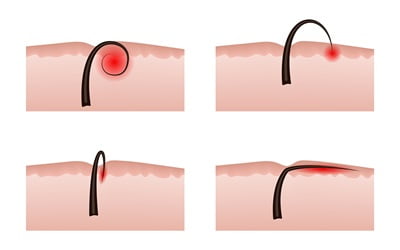 Ingrown hair can actually occur anywhere, but it is most often seen in areas of the body where the hair is thicker and frizzier and where we shave it off. Often, hair is cut at an angle during shaving and does not grow back straight. If the pores are then blocked by sebum (an oily, waxy substance produced by your body's sebaceous glands) or scurf (thin dry scales of skin), there is an increased risk that hair will grow in. If the skin in that area is also delicate and exposed to rubbing – like the armpits – this increases the risk.
What is ingrown hair?
Ingrown hair can actually occur anywhere, but it is most often seen in areas of the body where the hair is thicker and frizzier and where we shave it off. Often, hair is cut at an angle during shaving and does not grow back straight. If the pores are then blocked by sebum (an oily, waxy substance produced by your body's sebaceous glands) or scurf (thin dry scales of skin), there is an increased risk that hair will grow in. If the skin in that area is also delicate and exposed to rubbing – like the armpits – this increases the risk.A cosmetic problem or a health issue?
First things first: Ingrown hair isn't usually dangerous. After some time, the body becomes aware of the ingrown hair and gets rid of it itself. However, it is not possible to say exactly how long the ingrown hair will remain in place. It will disappear more quickly or more slowly depending on skin type and irritation. It is important not to make the affected area worse by scratching. In a few cases, the hair root may become inflamed. This may be due to an infection caused by poor hygiene after shaving or to damaged skin in the case of neurodermatitis. Inflammation can also be caused by medication or fatty skin care products such as Vaseline or massage oil. In the worst case, a painful abscess can develop. In this case, do not under any circumstances attempt to remove the hair yourself or squeeze the area around it. You are going to have to see a doctor.Watch out when shaving
To prevent the development of ingrown hairs, there are a few things you should look out for when shaving:- Preparation: Treat the skin with warm water (do not use oils, as they block the pores). An exfoliant can be used before shaving. This gets rid of dead skin particles.
- Shaving: Always shave in the direction of hair growth and take special care in sensitive areas (the armpits or the genital area).
- After shaving: Use a non-greasy moisturising cream or body lotion. This will allow the skin to breathe and regenerate.
SWICA Benecura
The skin under your armpits has been inflamed and itchy for the past day. You don't know whether you should go to your family doctor, a pharmacy, or even the hospital. The Benecura app from SWICA supports you when you feel unwell or become ill. SWICA customers can use the SymptomCheck feature of the Benecura app, which was developed by doctors, to obtain information easily, quickly and reliably and immediately receive a personal recommendation about what to do next.For your health: santé24 and SWICA Benecura
Do you have a health question? Our physicians and healthcare professionals at santé24 are available 24/7 on +41 44 404 86 86 for SWICA customers. In addition to telephone health advice, patients whose conditions are appropriate for telemedicine can receive medical services such as diagnostics, treatment, and even e-prescriptions for prescription medications.
Do you feel ill? The SWICA Benecura medical app makes it easy to carry out a digital SymptomCheck. You will receive a personal recommendation about what to do next. Send your information in encrypted form to the santé24 online practice for your telephone consultation to significantly shorten the assessment.


